Why Businesses Are Moving to Cloud Hosting in 2026
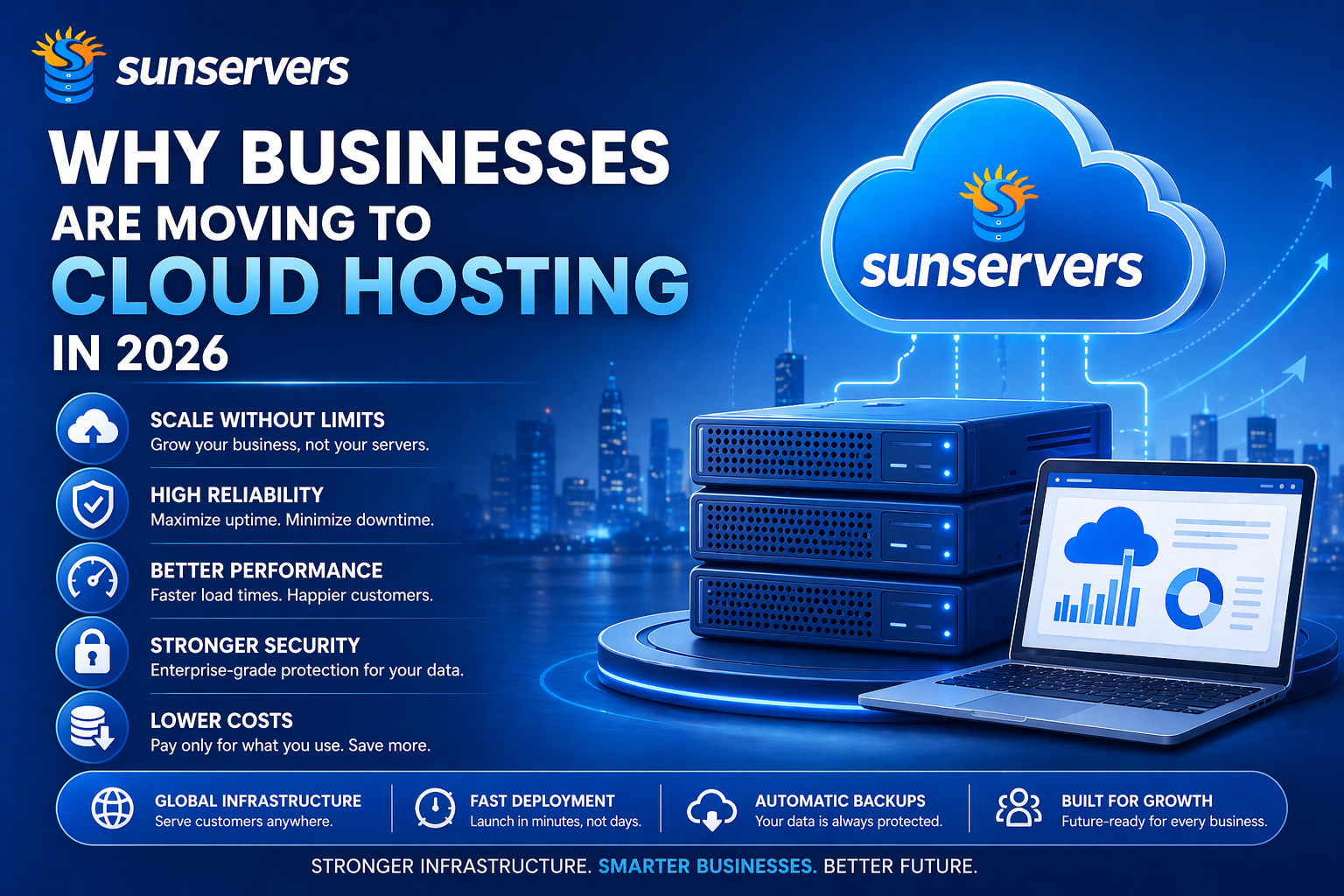
There was a time when owning a physical server felt impressive.
It sat in a rack somewhere, blinking confidently, making reassuring fan noises, and giving executives the warm feeling that “our infrastructure is under control.”
Then reality happened.
Hardware failed. Traffic spiked. Software updates broke things. Growth demanded more resources. Remote teams needed access. Security expectations rose. Costs quietly multiplied.
That old model didn’t disappear overnight—but in 2026, it is increasingly being replaced by something more practical:
Cloud hosting.
Businesses large and small are moving workloads, websites, applications, and digital operations to cloud infrastructure because it solves problems traditional hosting often creates.
And no, this isn’t just another technology trend wrapped in expensive buzzwords.
For many companies, cloud hosting is now the most sensible business decision available.
Let’s look at why.
What is Cloud Hosting?
Cloud hosting means your website, application, or system runs on a network of connected servers rather than relying on a single physical machine.
Instead of putting all your business operations on one box and hoping nothing dramatic happens, cloud hosting distributes workloads across multiple resources.
That usually means:
- Better uptime
- Easier scaling
- Faster deployment
- More flexibility
- Improved resilience
Think of traditional hosting as owning one truck.
Think of cloud hosting as accessing an entire logistics fleet when needed.
That difference becomes important quickly.
Why 2026 is a Tipping Point
Businesses have been adopting cloud services for years.
But 2026 feels different.
Why?
Because several forces are colliding at once:
- AI-driven workloads need scalable infrastructure
- Customers expect instant digital experiences
- Cybersecurity pressure is rising
- Remote and hybrid work remain normal
- Downtime tolerance is nearly zero
- Cost efficiency matters more than vanity infrastructure
In short:
Modern business demands modern infrastructure.
Cloud hosting fits that reality better than many legacy setups.
1. Scalability Without Drama
Growth used to be operationally awkward.
A successful campaign could create the strange problem of too much demand.
Traffic rises. Servers slow. Customers complain. Engineers panic.
Traditional infrastructure often requires manual upgrades, hardware purchases, or migrations.
Cloud hosting handles growth far more gracefully.
Resources can often scale up or down based on demand.
That means businesses can support:
- Seasonal spikes
- Product launches
- Viral traffic
- Rapid expansion
- Regional growth
Without turning success into an outage.
Why It Matters
Scalability is no longer a luxury feature.
It’s business insurance.
2. Better Uptime and Reliability
Single-server environments carry a simple risk:
If that server fails, everything becomes memorable for the wrong reasons.
Cloud environments reduce that dependence by distributing services across multiple systems.
If one component has trouble, others can often continue supporting workloads.
That can lead to:
- Higher uptime
- Faster failover recovery
- Less service interruption
- Better customer trust
Why It Matters
Every minute offline can cost:
- Revenue
- Leads
- Search visibility
- Customer confidence
- Internal productivity
Cloud hosting helps reduce those moments.
3. Faster Performance for Modern Users
Customers in 2026 are not patient.
If pages lag, apps freeze, or checkouts stall, they leave.
Cloud hosting often improves speed through:
- Global infrastructure regions
- Load balancing
- CDN integration
- Better resource allocation
- SSD/NVMe environments
- Performance tuning at scale
Why It Matters
Speed affects:
- Conversion rates
- User satisfaction
- Bounce rate
- Mobile experience
- SEO performance
Slow systems quietly damage growth.
4. Lower Capital Costs
Traditional infrastructure often means buying hardware before you fully need it.
That creates classic business waste:
- Overbuying capacity
- Underusing servers
- Maintenance contracts
- Hardware replacement cycles
- Cooling and power costs
Cloud hosting shifts many businesses to operational spending models.
You pay for resources used rather than guessing future demand with expensive purchases.
Why It Matters
Finance teams tend to appreciate fewer expensive surprises.
5. Better Support for Remote Teams
The workplace changed.
Distributed teams now need systems available from anywhere.
Cloud platforms typically make collaboration easier with:
- Web-based dashboards
- Remote management
- Multi-user permissions
- Global access
- Easier integrations
Why It Matters
Infrastructure should support modern work—not resist it nostalgically.
6. Stronger Security Options
Security in 2026 is not optional housekeeping.
It is board-level risk management.
Cloud hosting providers often offer enterprise-grade security features such as:
- Network firewalls
- Encryption
- Identity access controls
- Automated patching
- Threat monitoring
- Backup systems
- DDoS mitigation
Now, cloud does not magically make businesses secure.
Poor decisions still travel well.
But strong platforms provide better tools than many aging in-house systems.
Why It Matters
Security incidents are expensive in money, trust, and reputation.
7. Faster Deployment and Innovation
Traditional environments can be slow to change.
Need a new staging server?
Open a request. Wait. Approvals happen. Somewhere.
Cloud environments often allow faster provisioning.
Teams can launch:
- Test environments
- Development servers
- Regional instances
- Backup systems
- New applications
In far less time.
Why It Matters
Speed of execution is now a competitive advantage.
8. Better Disaster Recovery
Bad things happen.
Hardware fails. Power issues occur. Human mistakes remain undefeated.
Cloud hosting often improves recovery through:
- Snapshots
- Automated backups
- Geographic redundancy
- Replication
- Rapid restoration workflows
Why It Matters
Recovery planning matters most after everyone wishes it had mattered earlier.
Who is Moving to Cloud Hosting?
The answer now is: nearly everyone.
Including:
- E-commerce stores
- SaaS companies
- Agencies
- Media brands
- Healthcare organizations
- Financial services firms
- Local businesses growing online
- Startups avoiding hardware costs
Cloud adoption is no longer limited to giant enterprises.
Common Objections (and Reality)
“Cloud Hosting is Too Expensive”
Sometimes poorly managed cloud spending becomes expensive.
So does wasteful traditional infrastructure.
Smart configuration matters more than labels.
“Our Current Setup Works Fine”
Many systems work fine—until growth, failure, or new requirements expose limits.
The best time to modernize is before emergency migration mode.
“Cloud is Less Secure”
Cloud can be highly secure.
Misconfigured cloud can be insecure.
That sentence also describes offices, laptops, and humans.
When Cloud Hosting Makes the Most Sense
Cloud hosting is ideal when a business needs:
- Growth flexibility
- High uptime
- Better performance
- Multiple locations
- Fast deployments
- Strong recovery planning
- Modern integrations
If digital operations matter, cloud deserves serious consideration.
When Traditional Hosting Still Works
To be fair, traditional hosting can still suit:
- Very small static websites
- Predictable internal tools
- Legacy systems with special constraints
- Highly customized hardware needs
Not everything needs migration theatre.
But many businesses benefit from moving core web workloads.
How to Choose a Cloud Hosting Provider
Look for:
- Transparent pricing
- Strong uptime reputation
- Security tooling
- Easy scaling
- Geographic server options
- Backup systems
- Good support
- Clear documentation
Marketing slides are not infrastructure strategy.
Evidence matters.
Final Verdict
Why are businesses moving to cloud hosting in 2026?
Because business priorities have changed.
Companies need systems that are:
- Fast
- Flexible
- Reliable
- Secure
- Scalable
- Cost-conscious
Traditional hosting can still work.
But cloud hosting is increasingly the smarter default for organizations that expect growth, uptime, and modern performance.
The businesses winning online are not just buying better websites.
They are building on better foundations.
FAQs
Is cloud hosting better than shared hosting?
For most growing businesses, yes especially in performance and scalability.
Is cloud hosting expensive?
It depends on usage, but it often provides better long-term value.
Does cloud hosting improve SEO?
Indirectly, yes through better speed and uptime.
Should small businesses use cloud hosting?
Many should, especially if websites generate leads or sales.
Category:Web Hosting
