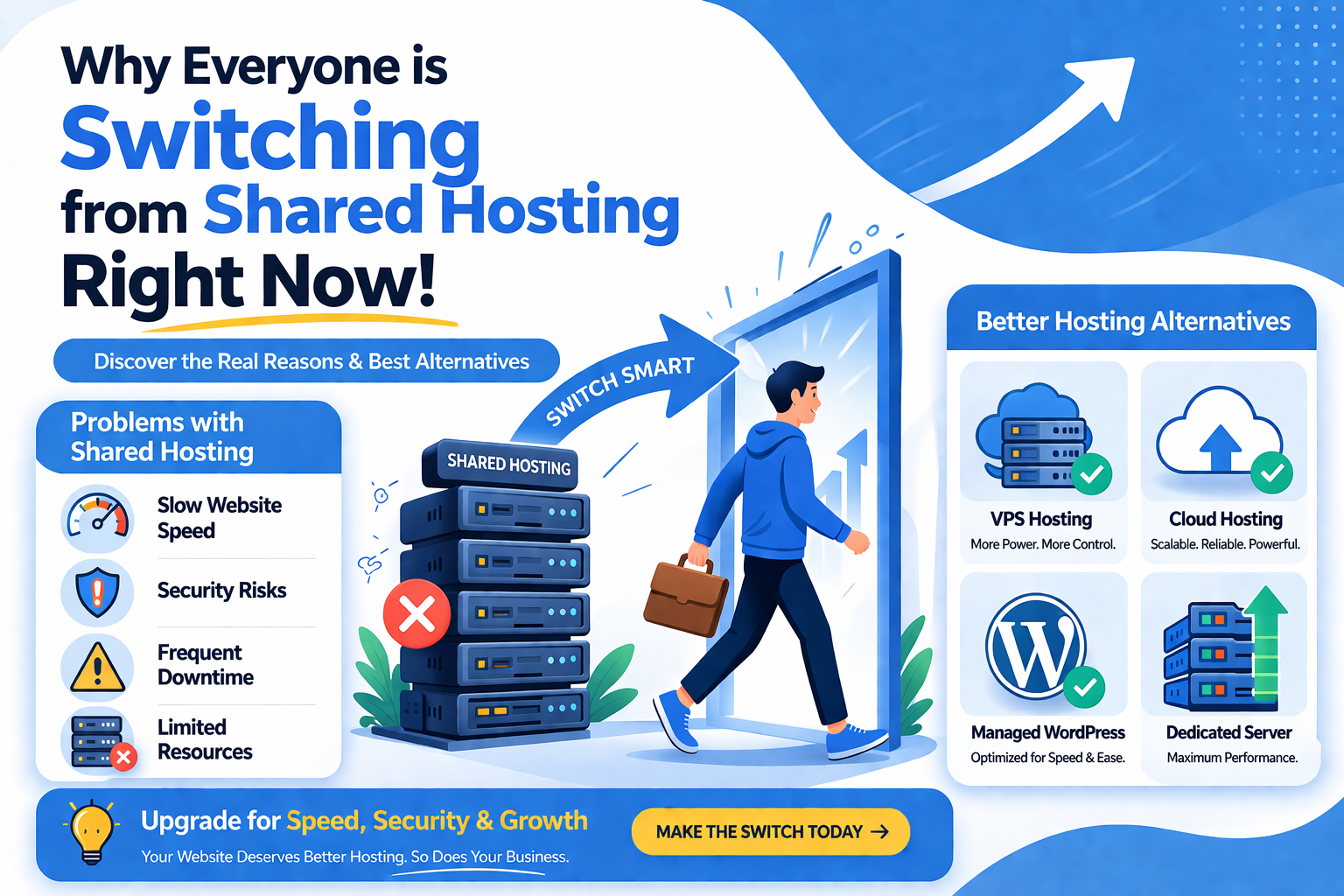
Why Everyone is Switching Shared Hosting Right Now
For years, shared hosting was the go-to choice for beginners, bloggers, and small businesses looking for affordable website hosting. It was cheap, simple, and widely available.
But things are changing fast.
In 2026, more website owners than ever are switching away from shared hosting and upgrading to faster, safer, and more reliable alternatives.
So what happened?
Why are people switching shared hosting right now?
In this guide, we’ll explain the real reasons behind this trend, the biggest drawbacks of shared hosting, and the better hosting options you should consider today.
What is Shared Hosting?
Shared hosting means your website shares one server with many other websites.
Think of it like renting one apartment with dozens of roommates.
Everyone uses the same resources:
- CPU
- RAM
- Storage
- Bandwidth
- IP Address (sometimes)
This makes shared hosting cheap, but it also creates many limitations.
That’s why many users are now upgrading.
1. Slow Website Speed is Hurting Rankings
Website speed matters more than ever.
Google rewards fast websites, and users expect pages to load in under 3 seconds.
With shared hosting, if one website on the server gets traffic spikes, your website can slow down too.
This creates problems like:
- High bounce rate
- Lower Google rankings
- Poor user experience
- Fewer sales and leads
Many businesses now realize cheap hosting costs them more in lost traffic.
Why People Leave:
They want faster hosting with dedicated resources.
2. Shared Hosting Security Risks
When many websites share the same server, security risks increase.
If one poorly managed site gets hacked, malware can spread or affect nearby accounts in some environments.
Common shared hosting issues:
- Malware infections
- Weak firewall setups
- Spam blacklisting
- Outdated software vulnerabilities
- Limited advanced protection
Modern businesses want stronger protection.
Why People Leave:
They choose hosting with:
- Isolated accounts
- Daily backups
- Malware scanning
- Web Application Firewall (WAF)
- DDoS protection
3. Traffic Growth Causes Problems
Shared hosting works fine for very small websites.
But once traffic grows, performance drops quickly.
If your website starts getting:
- Viral traffic
- Seasonal spikes
- Ad campaign visitors
- E-commerce shoppers
…shared hosting may struggle.
This can lead to:
- Server errors
- Downtime
- Slow checkout pages
- Lost revenue
Why People Leave:
They move to scalable cloud hosting or VPS hosting.
4. Limited Control and Features
Shared hosting plans are beginner-friendly, but often restrictive.
You may not get:
- Full server control
- Custom software installs
- Advanced caching tools
- Root access
- Better performance settings
As websites grow, owners need more flexibility.
Why People Leave:
They want hosting that grows with their business.
5. Cheap Pricing Often Becomes Expensive Later
Shared hosting is famous for low intro prices.
You may see offers like:
- $1/month
- $2/month
- Free domain included
But renewals can be much higher.
Hidden costs may include:
- SSL upgrades
- Backups
- Migration fees
- Higher renewal rates
- Add-on security tools
Why People Leave:
They want better long-term value, not just low starting prices.
6. Poor Support During Critical Problems
Some low-cost shared hosts handle thousands of customers with overloaded support teams.
When your website crashes, delayed support becomes expensive.
Users complain about:
- Slow ticket responses
- Generic answers
- Upselling instead of solving
- Limited technical help
Why People Leave:
They switch to managed hosting with expert support.
7. SEO Demands Better Hosting in 2026
SEO is more competitive than ever.
Google now cares deeply about:
- Core Web Vitals
- Speed
- Uptime
- Mobile performance
- Security (HTTPS)
Shared hosting can make these harder to achieve.
Why People Leave:
They want SEO-friendly hosting with optimized infrastructure.
Best Alternatives to Shared Hosting
If shared hosting no longer fits your website, here are better options.
1. VPS Hosting
Best for growing websites.
Benefits:
- Dedicated resources
- Better speed
- More control
- Improved security
Best for:
- Medium traffic blogs
- Agencies
- Growing businesses
2. Cloud Hosting
Best for scalability.
Benefits:
- Handles traffic spikes
- High uptime
- Fast global performance
- Pay for what you use
Best for:
- Startups
- E-commerce stores
- Fast-growing brands
3. Managed WordPress Hosting
Perfect for WordPress users.
Benefits:
- Auto updates
- Better caching
- Security monitoring
- WordPress expert support
Best for:
- Bloggers
- Affiliate marketers
- Content websites
4. Dedicated Server Hosting
Best for very large websites.
Benefits:
- Maximum control
- High performance
- Full server resources
Best for:
- Large businesses
- Enterprise sites
- High-traffic platforms
Who Should Still Use Shared Hosting?
Shared hosting is not dead.
It still works for:
- Brand new blogs
- Hobby websites
- Portfolio sites
- Very low traffic businesses
- Testing projects
If budget is the top priority, shared hosting can still be useful.
But once growth begins, upgrading makes sense.
Signs It’s Time to Leave Shared Hosting
You should upgrade if:
- Website loads slowly
- Traffic is increasing
- SEO rankings are dropping
- Frequent downtime happens
- You run an online store
- Security worries are increasing
- You need better support
If two or more apply, it’s probably time.
How to Migrate from Shared Hosting
Moving is easier than most people think.
Basic Steps:
- Choose new hosting provider
- Backup website files
- Migrate database
- Update domain DNS
- Test website speed
- Enable SSL
- Monitor uptime
Many hosts now offer free migration.
Final Verdict
So, why is everyone switching shared hosting right now?
Because websites today need more than just cheap space online.
They need:
- Speed
- Security
- Reliability
- Scalability
- Better support
- SEO performance
Shared hosting was great for the old internet.
But modern websites demand modern hosting.
If your site is growing, upgrading now could improve traffic, rankings, and revenue faster than you expect.
FAQs
Is shared hosting bad?
Not bad just limited. It’s good for beginners but not ideal for growing websites.
What is better than shared hosting?
VPS hosting, cloud hosting, and managed WordPress hosting are common upgrades.
Does hosting affect SEO?
Yes. Speed, uptime, and security can impact rankings.
When should I upgrade hosting?
When traffic grows, speed drops, or your business depends on the site.
Category:Web Hosting
